

White Lessons
Or being POC in this moment.

I attended a street aid training last night as part of an effort to equip myself with the tools to help those who are protesting, observing, and risking their lives every day here in Minneapolis. I took a bus down to South to a local LGBT services center that was hosting the event with @minnesota50501. I was incredibly nervous because as I walked up to the building, I could see through the glass windows there were two people standing next to small living room area where I thought they might be holding the training. Annoyingly punctual, I had arrived only a few minutes past the start time, so I figured maybe I would be one of only a few attending that night. Maybe they hadn’t gotten the attendance they expected.
When I entered, they greeted me and told me the training was going on upstairs in the conference room. I made my way up the stairs and saw the conference room they mentioned at the end of the hall. The door was propped open and I could see a packed row of chairs and people standing in a long line next to each other at the back of the room. A man directing people coming in came up to me and said, “Unfortunately, it’s standing room only, but there’s some more space on the far side of the room if you want to scootch over there!”
As I entered the room, I saw rows upon rows of chairs (almost 8 deep) filled with butts. Everyone’s attention glued to the front where presenters were standing in front of a Powerpoint slide detailing basic first aid safety. I was shocked. And then I felt chills. I could feel them prickling on my arm under my fleece.
As I made my way over to the far side and found a small space to stand, I stopped for a moment to take stock of the room. Here were the people I’d been looking for. A room full of Minneapolis residents who were concerned and had decided to show up; and what’s more, had decided to show up in the same way I was: to help people. With all of us trained, we could really ensure that our braver brethren would be kept safe at protests.
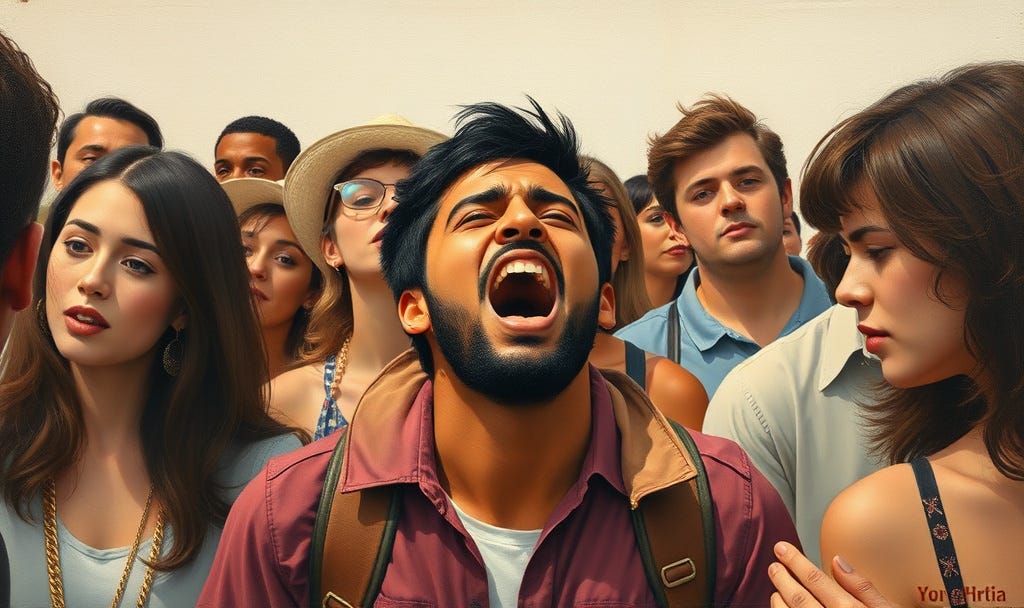
What also shocked and pleased me was the diversity in the crowd. Black, brown, mostly white. Old, young, somewhere in between. As I sat in on the session, people kept raising their hands to give input and tips based on their experiences. There was a lot of reference to the George Floyd protests. To Occupy Wall Street. It comforted me to know that I was entering a space where generations of people had already been showing up. There was a nice man with a welcoming smile and grey hair at the front of the room who told us that most of what we’d be doing would be washing out eyes, to always ask permission before treating someone, and to stay away from police with batons because, and he hesitated before cursing, “They hurt like shit.”
I was in awe of my newfound city. It was clear the people in this room had been doing this for a long time. But I think what inspired me more was seeing a petite, young woman at the back of the room, sitting with a notepad, her glasses hanging low on her nose and her mousy brown hair dangling down to her waist. I’m not a large man, but even I knew I was sturdier than her just by looking at her. She was going to go out there? In the tear gas? She was going to bring a first aid pack and help people decontaminate? We really are all in this together.
For the past week since Alex Pretti’s murder, I’d really been going through it. I’d just come back from a trip to Puerto Vallarta—a trip I went on when Renee Good had been murdered only a week prior and there were calls for a general strike in Minneapolis the following Friday—and my immense guilt for not being home in my city racked me for a full day upon my return. I scrolled endlessly on Instagram that Monday just to feel caught up. By Tuesday, I was locked in on how I was going to act. By Wednesday, I was attending training sessions on deportation, safety in protests, and first aid. And all the while there was this nagging sensation in my brain that I wasn’t seeing or hearing much of anything from those closest to me. I felt crazy, as I’d been feeling crazy since all of this began. Since the Palestinian genocide also began. Was I interpreting what was happening correctly? Did no one else feel my same sense of urgency? Was no one else scared and unable to go on with their daily lives?
I knew my workplace wasn’t phased. Things were going on as normal. People forgot I even lived in Minneapolis, and when I asked for reduced hours so that I could start taking action in my community, they were supportive but continued to ask me what the transition plan was and about upcoming product launches I was overseeing. These white people in LA and San Francisco didn’t understand that I was pulling back because I was frightened for my life and my community’s. That maybe I didn’t want to talk about that right in that moment, that maybe I couldn’t care less.
But I think what made me feel the most crazy was my white friends. I wasn’t hearing from them about what was going on. I was seeing their disgust and outrage about developments in the news. I knew deep down they were on my side. But I couldn’t feel it. And I certainly didn’t see that same sense of urgency I’d been feeling all week. Didn’t they realize Alex had only died a few days ago? That Bovino’s departure meant nothing for the people on the ground and the families still being separated? I sent a few texts to let them know where I’d be this week. That first aid training. A rally in downtown Tuesday night. I didn’t get any responses to join.
So, when I entered that room in South Minneapolis, and saw a room full of people who actually were as scared as me, who felt it was paramount that they take action NOW, it was comforting because it clarified for me: no, you’re not crazy, this is happening. look, other people are seeing it, too.
I feel the need to preface this post because I don’t want it to seem like my white friends don’t support me. They do, and I’ve felt loved by them even only knowing them a few months since I moved. They vote the way I do, some of them joined me in protest after Renee’s murder, and a lot of them I know are seeing what’s going on and are saddened. But, as I talked about with my therapist this week in expressing my anger towards White America, I realized I’ve spent a lot of my life making my white friends feel comfortable. I used to laugh at racist jokes about Mexicans with my high school friends in Southern California. I’ve delicately broached race and political topics with white boys I’ve dated, trying not to sound too radical or more well-read than them. I even recently kept my fear and panic to myself during a Traitors watch a couple weeks ago when one of my friends told me a kid had just been taken from Target with a passport in his back pocket. No one else seemed phased by the comment that had made me start to panic, so I didn’t want to make it all about me and my fear that I could be next.
So all that to say, I’m going to do my best to express what I’m feeling in this moment and hope that it doesn’t come across like it’s us against them, that white people are the problem, that my friends don’t support me. I know that’s not true, but there are still things I feel are worth expressing about what it’s like to be a person of color in this moment and how that experience is far different than what a white person is able to feel in this moment. Because they have a choice, and I feel I do not.
Let’s talk about this moment. But let’s focus it down to my experience. When the ICE raids started happening last year, my immediate thought was: I need to renew my passport. I started obsessively researching how to immigrate to other countries, in case I’d need to do it on a moment’s notice, just like the Jews had in 1930’s Germany. Mexico was a prime target for me, as they have an easy temporary visa program for remote US workers. When I was considering moving out of LA, I had Mexico City, and Minneapolis on my list. Mexico City’s main benefit would be that I could escape the turmoil of America for a few years. Protect myself from deportation. And not have to walk around my city feeling scared for my safety.
Obviously, Mexico City didn’t happen (as a white-washed Mexican-American, I don’t speak Spanish fluently and I felt if any crisis should happen, it would be a lot harder to navigate in a foreign language). I moved to Minneapolis, which is notoriously white. Naturally, I made friends with a group where there are only a handful of people of color, only 2 in the group I regularly hang with. Being the only POC in a group of white friends is not new to me, and it’s what I expected here in Minneapolis. In fact, because I’d been trained from a young age to assimilate, I come across as basically white. My privilege in that and being mixed race allowed me not to have to think about it too much.
Cut to the ICE raids starting here in Minneapolis. My fear level went up. I started getting texts from my mom almost daily, checking in on her Latino son and telling me to carry my passport around, that they only cared about the color of your skin, and to not be outside too much. I wondered then, were my white friends’ parents doing that? Why me? And I felt my identity as a person of color very strongly. I also felt “othered” from my friends, merely because I knew they probably weren’t having that same experience.
Cut to Renee Good’s murder. My fear level quadrupled. They were killing white people in the street? White mothers? There’s nothing they wouldn’t do. No one was safe, and especially not brown people, no matter if they were white-passing. I applied for my passport card that same day, for fear that I would need something I could easily carry around to show ICE agents my status as a US citizen. Did my white friends feel that same fear? I know from asking them that they did not.
Cut to that night we watched Traitors. It was the same day ICE agents entered a Target store and kidnapped two teenagers working there, both of whom were Latino. That’s who my friend was referencing when he said that one had been taken with a passport in his pocket. In his pocket?! I’d spent the last year believing that my passport, my citizenship, would protect me if I only showed them. But now that was thrown out the window. They were taking anyone and everyone, and knowing that ICE kidnappings happened within 2-3 minutes and that within hours I could be flown to another state without due process, I knew my own life was in danger. But when I pressed him for answers—was it true? when did they take him? did he show it to them? what happened after?—he told me he hadn’t asked, he didn’t know any more info. He hadn’t thought to ask, to look into it further? Clearly, I knew, he didn’t see it as info he needed because he wasn’t worried about that same thing happening to him. Whereas I would’ve asked everything under the sun to figure out how I could prevent that from happening to me.
Cut to a citywide protest that happened that same weekend, starting from Powderhorn Park and leading to where Renee died. I went with a group of friends, but the majority of them were not from my core friend group. They were from an adjoining friend group. (There’s a whole gay history behind that, but I won’t get into it here). I knew who was missing from my white friends, and who had showed up. I was pleased to find that one of them had started using his 3D printer to print whistles, one of which he gave to me. That was comforting, to know that he cared enough to use whatever he had at his disposal to help. We spent the day with frozen toes marching in the street, and after, rested and ate soup at one of my friend’s houses. I felt warm and seen.
Cut to this week, mere days following Alex’s murder. I was glued to my phone, desperate for information for how things had escalated, what ICE was doing, what actions people were taking. I got a text from a friend that he was off social media again. How? I asked him later, when broaching this subject of feeling disconnected from my friends’ experiences. I felt I needed to be plugged in as a form of survival, and because there were people like me out there getting attacked who needed my help.
All of this to say, the experience I’ve been having in this moment has deeply impacted my life. I’m afraid to go out on walks and I always take a whistle with me just in case I need to help someone else being kidnapped. I’m struggling with guilt and purpose to figure out where I can tap in with the movement, while trying to calm my fear of getting shot or taken. I’m finding it incredibly difficult to live my normal life, enjoy my first winter in Minneapolis, think about boys and movies and TV shows, because I feel as though I’m in a war zone. I’m considering learning how to handle a gun for the first time in my life, because I understand that even if you don’t like guns, you can still come into contact with one in this country. I’m getting texts from my mom’s brother asking if I’m okay, reminding me that these Feds only care about the color of my skin. Yeah, I know Uncle Frank. Do my white friends get told this on a weekly basis?
When I left for PV, my mom called my phone and panicked because she couldn’t get through at all (it was in airplane mode), thinking I’d been detained. She had my brother call me repeatedly until I landed and was able to tell him I was okay, just in Mexico. My mom’s fear for me was and is palpable. Are my white friends’ parents just as afraid?
It seems that in this moment, what hurts the most, is that I feel disconnected. I can feel my “otherness” because of the way people are reacting to me, because of the way I’m feeling, and because I can tell there are people I know who are less scared and activated than me. Which makes me feel alone, in spite of it being a farcical feeling and exactly what these fascists want. Like that scene in Harry Potter 5 at the end when Voldemort tries to convince Harry that his friends don’t care about him.
But there is a silver lining. There are people who are helping, who are acting, and even in my own life, I have a couple white friends who are reaching out frequently to make sure I’m okay. Who are reaching out with the express intention about my identity, as if to say, “I know this moment is even harder for you, because of your race. Know that I’m here and you don’t have to respond.” That has meant the world to me. In fact it’s something I didn’t know I needed, but have benefitted from receiving without even asking.
And of course, there is this movement here in Minneapolis. The mutual aid networks, the protests, the student rallies, the parents and teachers protecting everyone’s children. And maybe some of my friends are contributing to these causes, are doing what they can to help. I don’t know though, because most of us haven’t discussed it. In fact, the only conversation I’ve had with how others are experiencing this moment was with the other POC friend in my group.
I remember one of our first convos was after Renee’s death. He talked about his frustration that our friends weren’t speaking up more or reaching out for ways they could take action. He had started a resource guide that listed actions people could take and was updating it every day. And I could tell he was exhausted. We both were. We acknowledged that we were both up and down throughout that week, and that we could accept that’s how we’d be for the foreseeable future. We wondered if our friends felt the same way. We talked about one of our friends who was showing up as an ally, who was giving us the support we felt we needed. We wondered if they could teach the rest for us. Would it be okay to ask? We decided against it and against bringing too much of it up with our friends. Two white-assimilating boys just trying to keep the peace. He’s honestly gotten me through a lot of this and has inspired me to continue to take action and put my own body on the line even though its scary. I remember he was the one who posted about the protest for Renee Good in our group chat. Some of our white friends started asking for more details—where, when, what’s the plan? I sent him a side text letting him know I could see the optics of white friends asking their brown friend to give them all the information they would need to take action, rather than providing it themselves. We had a little giggle and just appreciated that they cared enough to join.
I guess the other silver lining is that they’re receptive. I engaged two of them this week to talk about my feelings and ask how they were interpreting this moment and their place in it, because I wanted to understand and also to feel like I wasn’t alone anymore. I needed them to know how I felt. And they supported me, engaged with me, told me what they were feeling and thinking and worried about. A lot of it felt like they didn’t need to act in ways that might sacrifice their wellbeing or their jobs or their lives, which I took as just a difference in our identities. A white person can see this moment and worry about whether they can go on strike without getting fired. Can worry about whether they have time to devote to any form of action. But I don’t feel that same sense of choice. I have to. If I don’t cut back hours at work, if I don’t sacrifice that money, then I will allow people like Renee and Alex to die without support. I won’t be able to help people who look like my mother, I won’t be able to keep them from being torn from their families. And what’s more, if I don’t do something now, if I wait for white legislators like Amy Klobuchar, Tim Walz, and Jacob Frey to use the “system” to correct things by making deals with the other side which could take weeks—just yesterday the Senate voted to extend ICE funding for 2 weeks in spite of their demands, not realizing that Renee and Alex were killed within 2 weeks of each other—then people will be taken, beaten, and killed. I could be one of those people. That is very real to me and is something I think about every day.
So, if you’re reading this, and you’re a white friend of mine in LA or Minneapolis or anywhere else, I implore you—take action. Make it urgent. Donate to a mutual aid network. Attend a webinar on the history of detention (I’ve linked two below that are coming up next week). Join a rapid response group and do your best to observe and witness. Call your senator, mayor, and governor every day, because honestly, I don’t have the energy. Give money to a family in danger of eviction. Attend a first aid training in case you see someone being attacked on the street, like Alex did. Consider skipping 1 day of work when they ask you to go on strike. And if nothing else, check in on your brown friends—all of them. They’re going through it right now. We are not okay. And just knowing that you see the world the same way, that you know we’re not okay, means a lot. Check in, and tell them you don’t need a response. I’ve found that does wonders for my mental health. I’ve linked other resources below that you can follow, one of them being my POC friend’s ICE manual.
Resources:
Detention Watch Network educational webinars: learn about immigration enforcement!
2/2, 2pm PT/ 4pm CT/ 5pm ET- Ending Family Separation, Detention, and Deportation // Poner fin a la Separación, Detención y Deportación de familias
2/19 @ 1pm ET/ 4pm ET- Melt ICE: Detention and Resistance under Trump // Derrite a ICE: Detención y Resistencia bajo Trump
Follow DWN on social media // Siga a DWN en medios sociales: Instagram and Facebook
@minnesota50501 & their linktree with ways to get involved in Minneapolis
@smittenkittenmn & their abundant calls to action for mutual aid, donations, and family rent donations